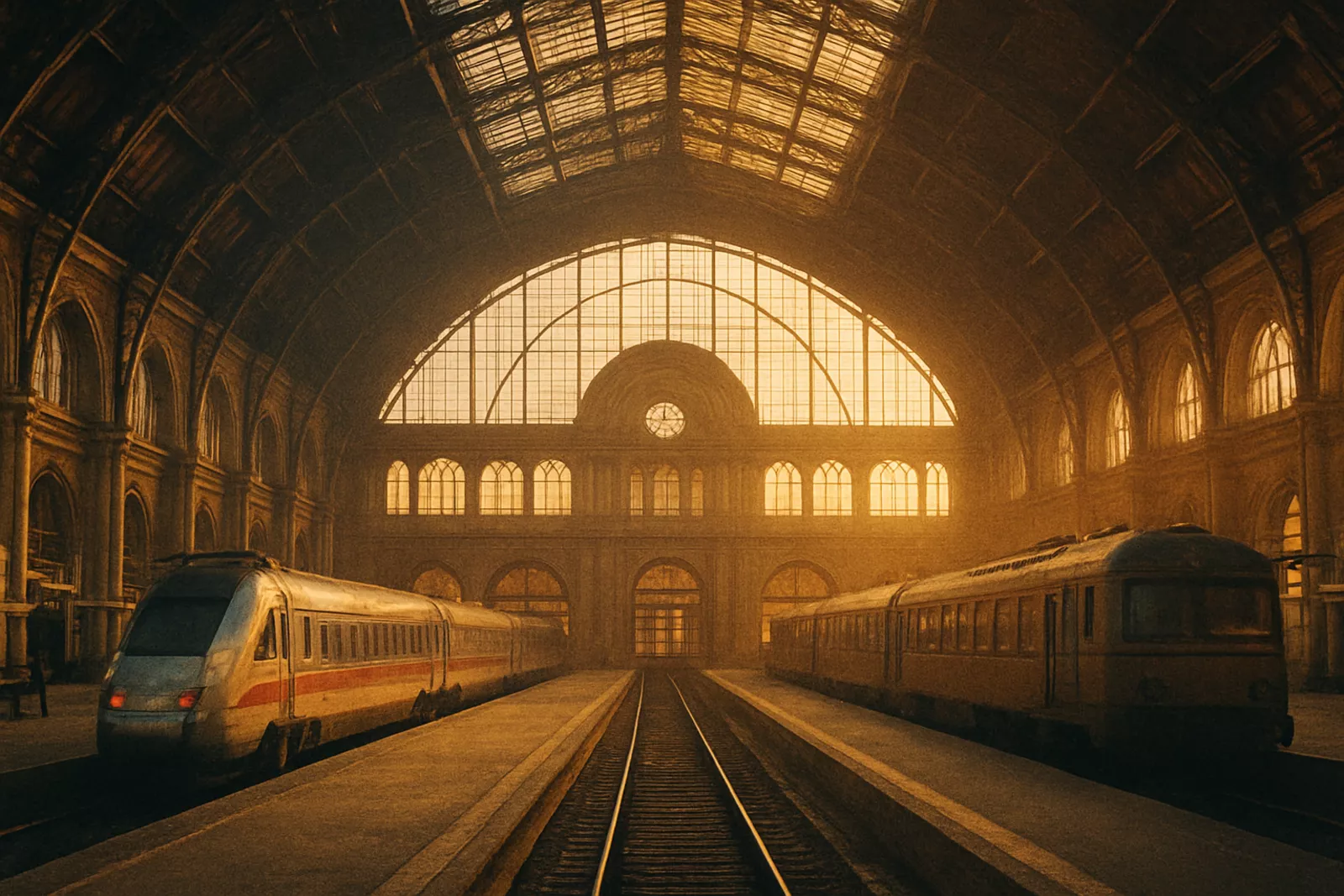
Travel Europe Without Flying: Trains, Buses, Ferries & Night Trains
Trains, buses, ferries and night trains connect every corner of Europe — here is how to plan trips that never touch an airport, whatever your reason for skipping planes.
Some travellers skip planes for the climate, some for comfort, some because airports drain the joy out of a trip — and for a good number of people, fear of flying is part of the story too. Whatever the reason, the result is the same: Europe is the easiest place on earth to travel overland, and you lose almost nothing by doing it.
High-speed trains cross countries in the time an airport takes to board you, night trains replace red-eyes with a hotel bed, ferries turn crossings into part of the holiday, and long-distance buses reach the towns rails ignore. This guide shows you how to combine them into genuinely comfortable trips — city centre to city centre, with none of the airport routine.
Why more travellers are skipping planes
Airports keep getting slower while trains keep getting faster: Paris–Barcelona, Milan–Rome or London–Amsterdam are now door-to-door wins for surface travel. Add climate worries, better night trains and cheaper advance fares, and skipping planes has gone from sacrifice to preference — for millions of Europeans, on every kind of trip.
Europe by rail is a complete network
This is the key fact: flying is not the default that you are opting out of. High-speed lines connect every major city in western and central Europe; night trains cover the long hops; ferries handle islands and sea crossings. From St Pancras to Palermo, from Lisbon to Helsinki, there is a surface route — usually with city-centre stations and no security queue.
Choose calm routes for your first trips
Start with one-seat rides under three hours: London → Paris, Paris → Bordeaux, Madrid → Barcelona. No transfers means no connection anxiety, and a direct train has a simple, predictable shape: board, watch the world go by, arrive in the centre. Add complexity only when the first trips feel easy.
What replaces the airport ordeal
Compare the two experiences honestly. Train: arrive 20 minutes early, walk on with your coffee, keep your shoes on, move around freely, get phone signal the whole way, and step off in the city centre. Flight: two hours of queues, restrictions and pressure. For an anxious traveller the train is not the second-best option — it removes precisely the parts of travel that feel out of control.
Control is the antidote
The part many anxious flyers fear most is being sealed in with no way out. Trains are the opposite: you can stand up any time, walk to the café car, change your seat, and — if it ever matters — get off at a station. That sense of control is why many nervous flyers find trains not just acceptable but relaxing from the first trip.
Night trains: sleep through the long part
For long distances, the sleeper is the anxious flyer’s best friend: you board in the evening, sleep in a real bed, and wake up hundreds of kilometres along. There is no red-eye, no takeoff, no 4 a.m. alarm — Munich to Rome or Paris to Vienna happens while you rest.
Tell people or don’t — both are fine
You do not owe anyone an explanation for choosing the train. Some travellers say “I prefer the train, it is more comfortable” and leave it there — true, and nobody argues. Travel companions who know tend to help plan; those who don’t simply enjoy the trip with you.
Don’t miss
First classic: London → Paris by Eurostar
Two hours sixteen, no transfers, under the city as you arrive. The one trip everyone should do once — from about €39.
A smooth high-speed run: Paris → Bordeaux
2h 05 of gliding countryside, café in the city centre. Proof that fast does not mean stressful.
Sleep through it: Munich → Rome by night train
Board at dinner, wake for breakfast in Italy. The long distance disappears while you rest.
Make the journey the destination
The Bernina, the Rhine gorge, the Côte d’Azur line: routes so good that the train is the point, not a compromise.
Reward arrival with food
Plan the first meal for arrival day — San Sebastián pintxos, a Roman trattoria — so the trip ends in a win.
Five gentle first trips (all direct, all city-centre to city-centre)
| Route | Time | Why it works | From |
|---|---|---|---|
| London → Paris | 2h 16 | One seat, underground arrival | €39 |
| Paris → Bordeaux | 2h 05 | Smooth high-speed, big reward | €19 |
| Amsterdam → Berlin | ≈6h | Direct IC, easy day ride | €40 |
| Munich → Rome | ≈12h 30 | Sleeper: sleep through the distance | €59 |
| Paris → Barcelona | 6h 45 | Mediterranean reward at the end | €49 |
Practical tips
- ✓ Arrive 20 minutes before departure, airport habits do not apply
- ✓ Pick a seat in the direction of travel if it helps; window seats calm many travellers
- ✓ Download films and podcasts; on most trains your phone works the whole way
- ✓ First trips feel easier with company — invite someone for the maiden run
- ✓ Book a direct train even if a connection would be cheaper
- ✓ Feeling tense mid-trip? Stand up, walk to the café car — on a train you always can
FAQ
Can I really see Europe without ever flying?
Yes — that is exactly what this site is about. Every itinerary here is 100% surface travel, and the routes database covers the most searched city pairs with real times and prices.
Should I work on the fear itself?
If you want to fly someday, cognitive behavioural therapy and exposure programmes have good success rates. But it is not a prerequisite for travelling: plenty of people simply go overland and live full travel lives.
What about far-away holidays?
Combine trains with ferries: Europe’s coasts and islands are well served, and sleeper-plus-ferry combinations reach surprisingly far. Longer trips take planning — that is what our guides are for.
What if I feel anxious mid-journey?
You can stand, walk, open a window in many coaches, change coaches at a stop, or simply end the journey at the next station and continue later. That freedom is exactly why surface travel feels so manageable — there is always an easy way out.
Keep reading
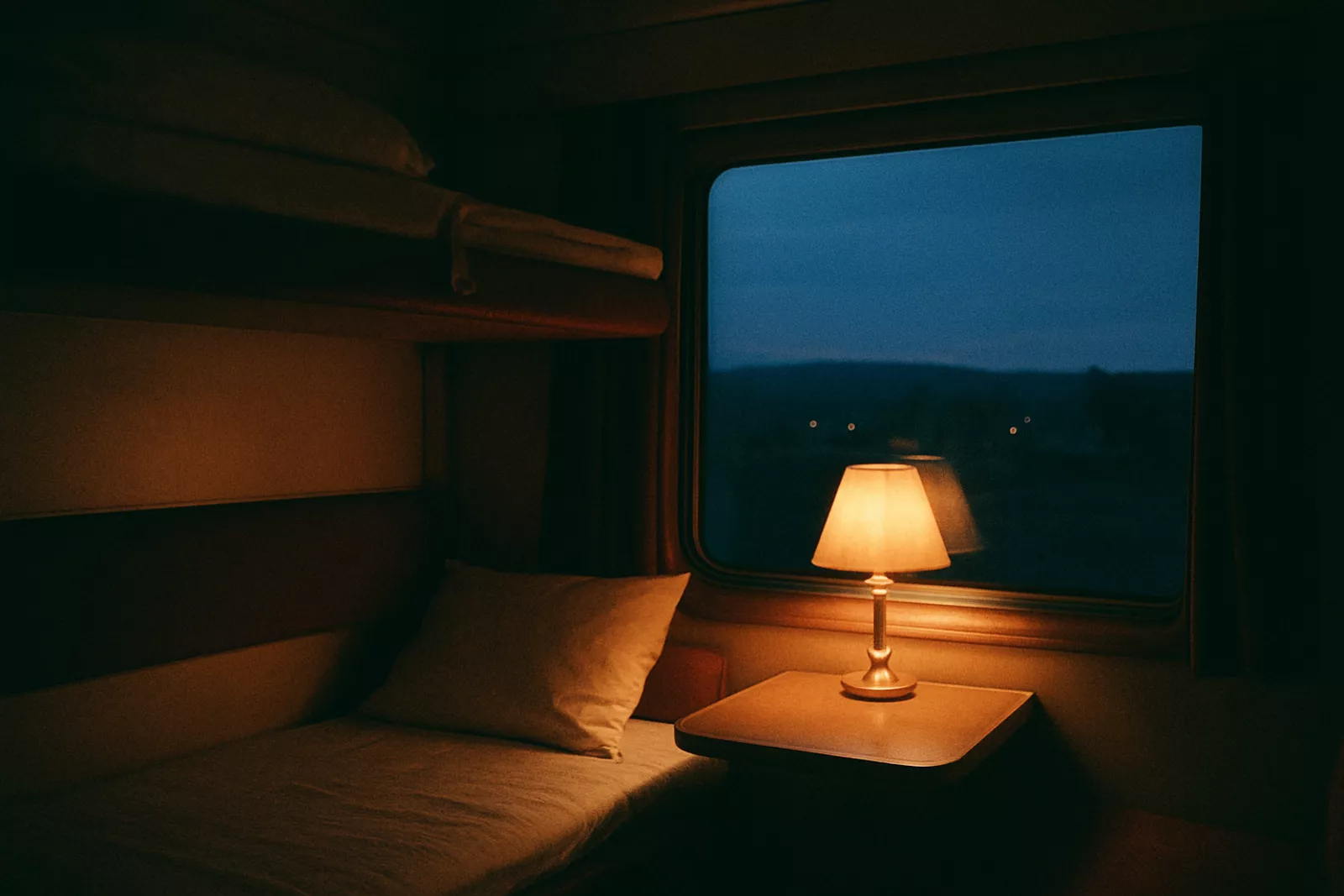
Night Trains in Europe: The 2026 Guide
Europe’s sleeper revival explained: the networks, the ticket classes, what the journey is really like, and the six routes worth booking first.
Interrail vs Point-to-Point: When the Pass Wins
The honest maths behind Europe’s rail pass: where it saves money, where single tickets win, and how to decide in ten minutes.
Train vs Plane: The Real CO₂ Numbers
How much greener is rail, really? The figures, the methodology, the honest caveats — and the five swaps that save the most.
Slow Travel in Europe: A Week Without a Plane
Fewer places, deeper days: how to build a one-week train trip that feels like a holiday instead of a checklist.